


A 78-year-old was arrested for blocking an Uber Eats robot in Philly. Now a lawmaker wants to tax every robot delivery
A 78-year-old was arrested for blocking an Uber Eats robot in Philly. Now a lawmaker wants to tax every robot delivery

Emma Caplan-FisherTue, November 3, 2026 at 1:00 PM UTC
0
Philadelphia may soon add a surcharge every time a sidewalk robot brings you dinner. Councilmember Jim Harrity has proposed charging robot operators 50 cents per delivery or 5% of the order’s cost, whichever amount is larger. The money would help fund free transit passes for low-income residents.
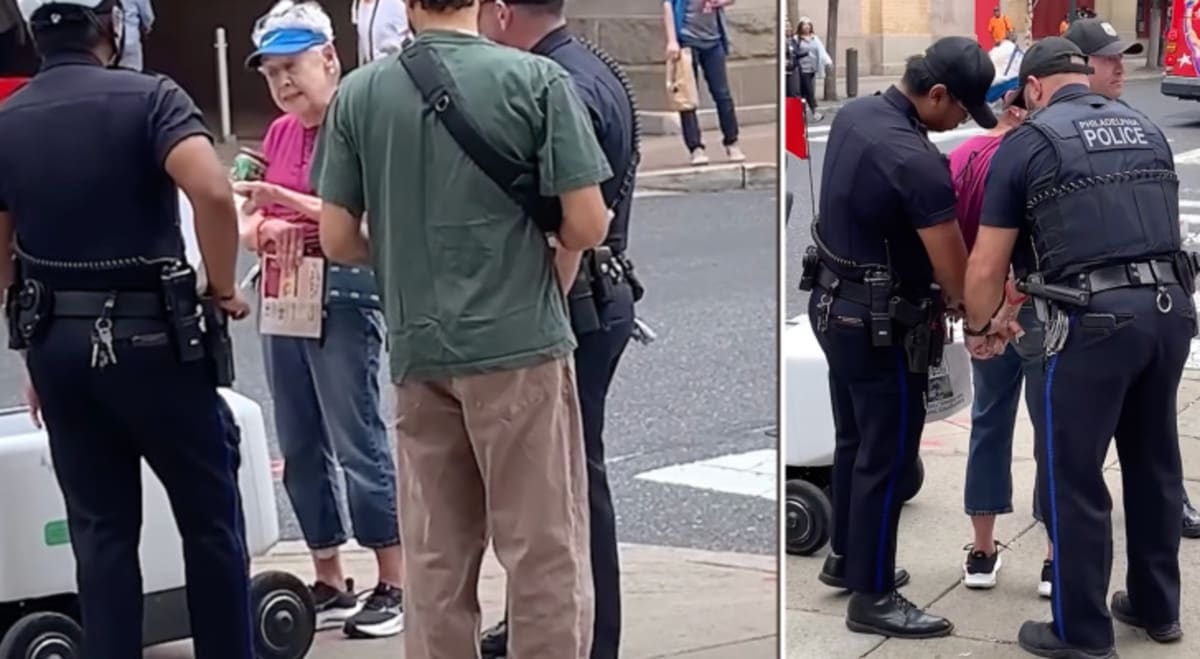
Robots were already a flashpoint in the city. In October, police arrested 78-year-old Carolyn Marvin, a University of Pennsylvania professor emeritus, after she stood in front of an Uber Eats robot on a downtown sidewalk. She told PhillyVoice she has done this for months to protest “corporations that displace human delivery workers in order to enrich their own bottom line.”
Must Read -
Dave Ramsey warns nearly 50% of Americans are making 1 big Social Security mistake. Here’s what it is and 3 simple steps to fix it ASAP
A single line on your car insurance policy could be inflating your premium by up to 30% — here's what to change
Jeff Bezos backs a platform that lets anyone invest in rental homes for as little as $100 — 6 ways to build wealth like a landlord without actually being one
Police said she ignored “multiple commands” to move, resulting in a criminal violation notice for disorderly conduct. Marvin plans to contest it on First Amendment grounds.
What the bill would do
Harrity’s measure reaches beyond food. It would also charge driverless taxi services like Waymo, which is testing cars in Philadelphia, $1 per ride or 5% of the fare, and add a 3% tax on driverless freight vehicles. Companies would have to register with the city and file quarterly reports.
Harrity said the aim is to protect jobs. “In a perfect world,” he said, “no one will pay the tax because they’ll just ban the robots.” The rates could still be adjusted as the bill moves through committee, according to PhillyVoice.
He added that the tax intends to help cover revenue the city stands to lose from its wage tax and its business income and receipts tax because of the technologies.
Uber Eats robots are run by a third-party company, Avride, not Uber itself.
But Philadelphia’s options may be limited. A 2020 state law, Act 106, gives the Pennsylvania Department of Transportation regulatory authority over the devices, and state law bars municipalities from regulating how the devices operate, with exceptions that include banning them where the city deems them hazardous.
Advertisement
Subscribe to Moneywise: Get Warren Buffett’s best investing lessons in 1 free guide
How other big cities are handling robots
Philadelphia isn’t the only city dealing with robotic rideshares and deliveries. For example, Chicago approved a delivery robot pilot in 2022. As of February, 100 robots were operating, split evenly between Coco Robotics and Serve Robotics, and the program ends in May 2027 unless the City Council acts, WBEZ reported.
Los Angeles charges flat permit fees and is weighing a switch to charging companies for every robot trip, LAist reported in April. Serve Robotics’ vice president of policy said the company pays fees in Los Angeles, Chicago and West Hollywood.
Miami Beach caps robots at 8 mph, requires a $100 annual permit per device and $100,000 in liability insurance, and bars them from idling on a sidewalk longer than 30 consecutive minutes unless they’re delivering, according to Supply Chain 24/7.
And Washington, D.C.’s transportation department said on July 16 that it permitted Serve and Coco, with zones up to a square mile and a maximum fleet of 25 devices during the first three months.
Most of these cities charge flat permit fees or set limits. Philadelphia’s proposal would instead take a cut of each trip.
What the fee could add to your order
By the bill’s math, a $40 order would carry a $2 fee (5%), while an $8 order would owe the 50-cent minimum, since 5% would be only 40 cents. The fee would apply to companies that own, operate and sell robot services, and neither the Inquirer’s nor PhillyVoice’s coverage says whether they would pass it on to customers.
For now, it’s an idea, not a line on your receipt. If Council passes it, it wouldn’t take effect until January 2028.
What To Read Next -
Here’s the average income of Americans by age in 2026. Are you keeping up or falling behind?
Your Social Security ‘Trump Bump’ in 2027 will be one of the biggest in 25 years — but there’s a serious catch no one’s talking about
Robert Kiyosaki issued grim warning for baby boomers. Many could be ‘wiped out’ and homeless ‘all over’ the country. How to protect yourself now
The tax breaks in Trump's 'big beautiful bill' expire after 2028. Here are 4 moves to make before the window closes
This article provides information only and should not be construed as advice. It is provided without warranty of any kind.
Source: “AOL Money”
