


Chinese electric bike imports surge as Africa’s EV investments diversify
Chinese electric bike imports surge as Africa’s EV investments diversify

ALLAN OLINGO Thu, September 10, 2026 at 6:29 AM UTC
0
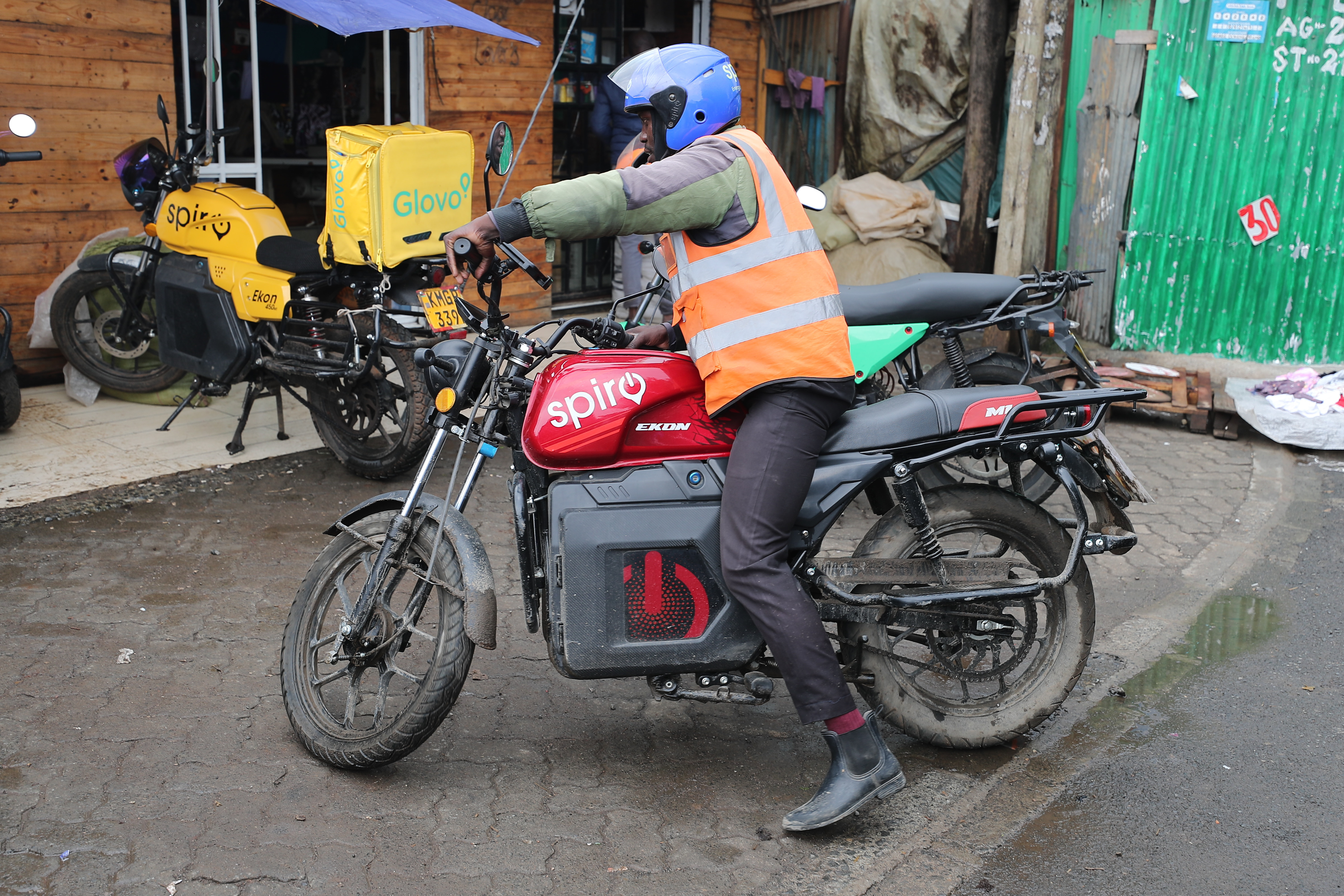
Africa’s electric motorcycle imports from China surged nearly 60% in the first half of 2026, led by Morocco, Egypt and Algeria
NAIROBI, Kenya (AP) — Africa’s imports of electric motorcycles and three-wheelers from China rose sharply in the first half of 2026, an increase that highlights a divide in the continent's transition to electric vehicles.
Two and three-wheelers account for a large share of vehicles on African roads and are heavily used commercially. So, switching to electric from gasoline and diesel engines could cut fuel consumption and urban air pollution.
Northern African countries like Morocco, Egypt and Algeria led the 60% surge in the continent's imports, to $114.6 million. The region has become a major destination for fully built Chinese electric scooters.
Investments in EV startups, meanwhile, are concentrated in East and Central Africa, where companies are building local assembly plants, battery-swapping networks and commercial motorcycle ecosystems.
Morocco led in imports in the first half, importing 80,188 units worth $21.7 million, followed by Egypt and Algeria. In sub-Saharan Africa, South Africa had the most imports, with 19,635 electric bikes worth $6.9 million.
Peter Kossakowski, an independent electric two- and three-wheeler specialist who has worked across Africa, said the difference reflects two distinct markets.
“In North Africa, Chinese imports are largely electric scooters and mopeds bought by consumers for commuting and short trips,” he said. In East and West Africa, motorcycles are more often commercial assets used by riders for up to 150 kilometers (about 100 miles) a day to carry passengers and goods.
Spiro, Africa's largest EV bike firm, raised more than $348 million in investments in the past year, while other companies are investing in local assembly, battery-swapping and charging networks aimed at commercial motorcycle taxi and delivery markets.
Tom Courtright, a non-resident fellow at the African Tech Futures Lab, said Chinese manufacturers supply many of the electric motorcycles used in East and West Africa, but local companies are adapting them for commercial use and operating the energy infrastructure.
Battery swapping allows commercial riders to replace depleted batteries rather than wait for a motorcycle to recharge, making the model more suited to riders who depend on the bikes for their daily earnings, he said.
Courtright said electric motorcycles are more likely to replace petrol bikes than to expand the overall motorcycle market, although lower running and maintenance costs could increase demand by about 20%.
Advertisement
The transition is already gaining ground. Electric motorcycles accounted for about 20% of motorcycle sales in Uganda last year and roughly 15% in Kenya, Courtright said.
The shift could also reduce fuel imports. Courtright estimated that widespread electrification of motorcycles could eventually displace roughly $600 million in fuel imports in Uganda and between $600 million and $800 million in Kenya.
The Chinese customs data captures vehicles entering a country, not necessarily those registered or used there, Kossakowski said.
In East and West Africa, much of the industry is still based on assembling imported components rather than manufacturing motorcycles from scratch. Motors, controllers and battery cells are still mostly imported. Local production is concentrated on simpler parts such as seats, footrests and metal frames.
Kossakowski said sub-Saharan Africa's bigger competitive advantage may be the supply chain that is developing around high-use commercial motorcycles, including battery swapping, financing and servicing.
But fragmented battery and swapping systems could limit the industry’s growth.
Operators often use proprietary batteries, connectors and software, preventing riders from using different networks and making it harder to build sufficient volumes for local battery production.
“Battery swapping solved the range problem by building closed systems,” Kossakowski said. “It now costs the sector twice by limiting manufacturing scale and battery resale value."
The transition, Courtright said, will depend on affordable financing, reliable electricity, charging and swapping infrastructure, predictable government policies and greater standardization across markets.
———
The ’ climate and environmental coverage receives financial support from multiple private foundations. AP is solely responsible for all content. Find AP’s standards for working with philanthropies, a list of supporters and funded coverage areas at AP.org.
Source: “AOL Money”
