


Democrat Abdul El-Sayed wins crucial Michigan Senate race over Mike Rogers
Democrat Abdul El-Sayed wins crucial Michigan Senate race over Mike Rogers

Arit John, USA TODAYWed, November 4, 2026 at 7:07 AM UTC
6
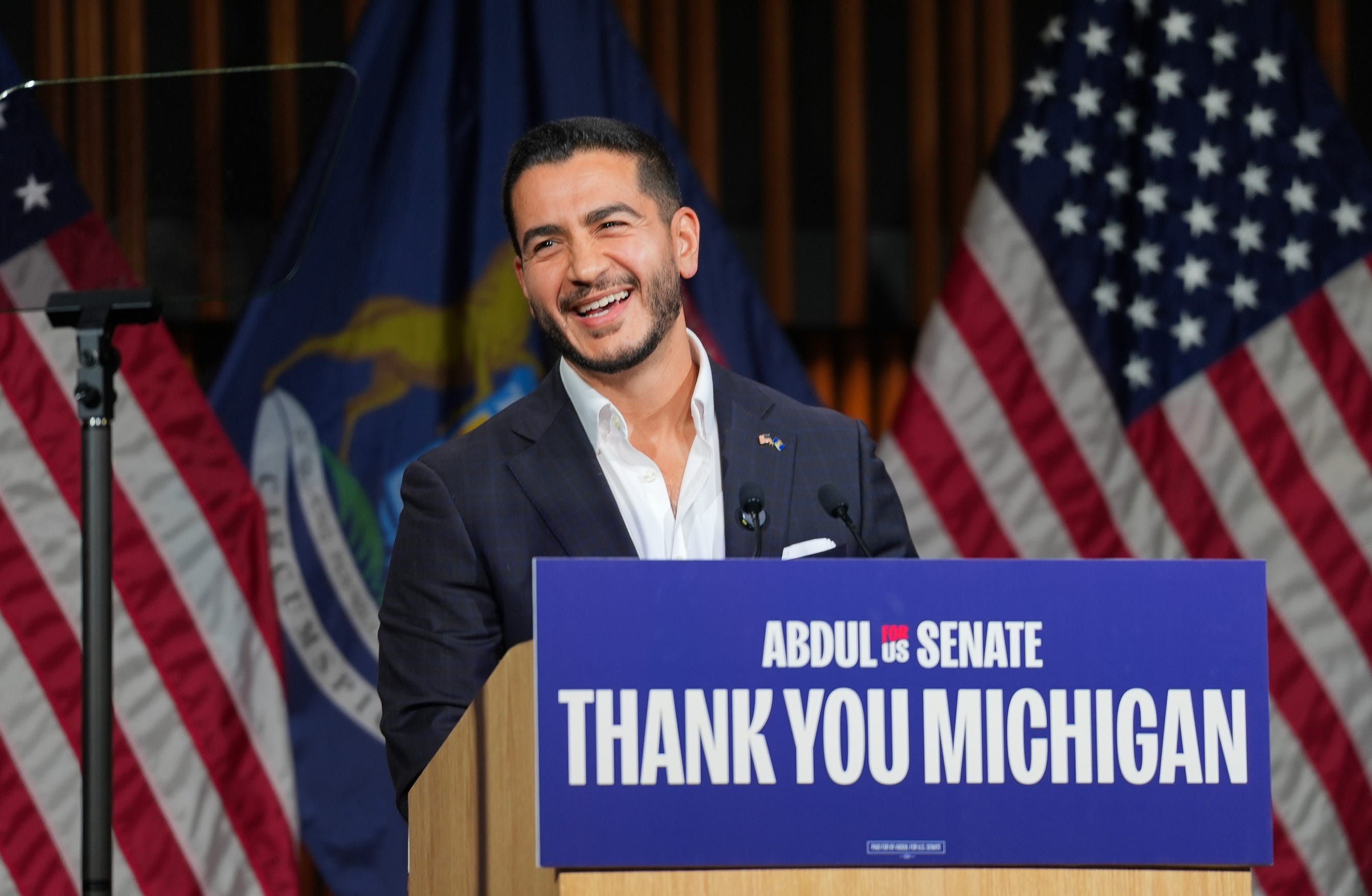
Abdul El-Sayed, a former Wayne County public health director, will win the Michigan Senate race, according to projections by DDHQ and Fox News, defeating Republican Mike Rogers as Democrats swept seats in a massive blue wave Nov. 3, winning control of both chambers of Congress.
El-Sayed, who was born in Michigan to Egyptian immigrant parents, will be the first American Muslim elected to the U.S. Senate.
His victory caps one of the most contentious elections of the 2026 midterm election cycle.
El-Sayed and Rogers, a former GOP congressman, frequently leveled personal attacks at each other, often aimed at challenging the other's masculinity. Some of Rogers’ Republican allies, including President Donald Trump, used Islamophobic language as they stumped against El-Sayed. And in the final days of the campaign, Rogers gained a shocking ally: Democratic Rep. Haley Stevens, who narrowly lost the Aug. 4 primary to El-Sayed.
Among Democrats, the Michigan Senate race had become the latest proxy war between the moderate and progressive wings of the party. Several Democratic leaders rallied behind Stevens during the primary, arguing that she had the best chance of defeating Rogers in the November election. Progressives said that if El-Sayed could win in Michigan, a swing state that voted for Trump in 2024, then their candidates could win in races across the country.
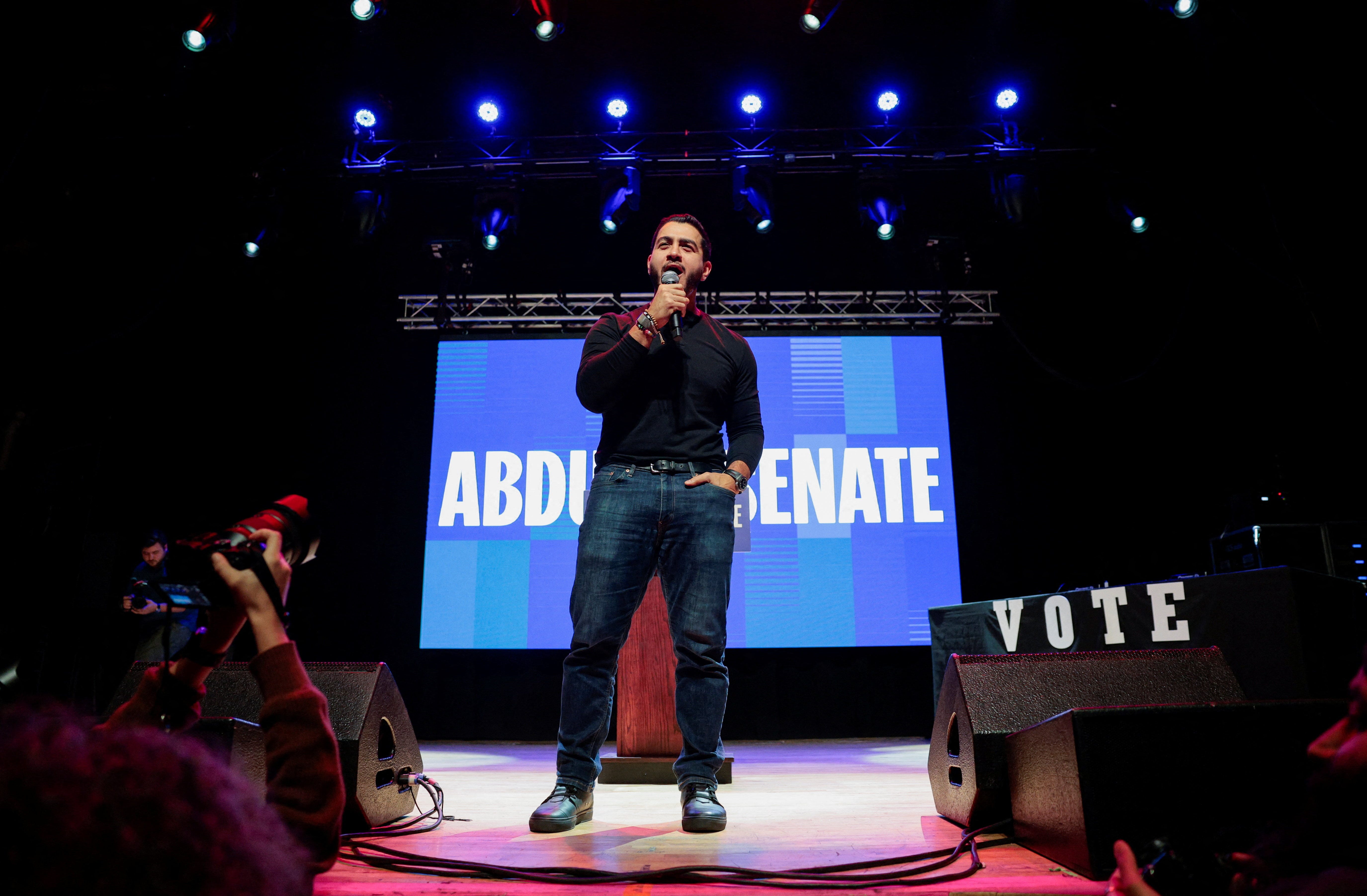
El-Sayed’s pitch to voters boiled down to a three-part slogan that became a constant refrain during his campaign rallies: Money out of politics. Money in your pocket. Medicare for All. He hammered Rogers over his attempts to defend the Trump administration's tariff policies, including a trade war with Canada, Michigan's largest export partner. El-Sayed also accused him of cheerleading the U.S. war with Iran, which has caused gas prices to skyrocket.
In the final weeks of the campaign, Rogers sought to distance himself from those parts of Trump's economic agenda. Rogers released a pair of ads, including one filmed in a grocery store, in which he said the Iran war should end, and a second set in a bar, in which he drank a Canadian beer and called for the trade war to be resolved.
Rogers argued that progressive policies such as Medicare for All would be too expensive for Michigan. The former Republican congressman and his GOP allies also sought to link El-Sayed to the Islamist Muslim Brotherhood. They pointed to his past support for former Egyptian President Mohamed Morsi, who rose to office with the organization's support, and his half-sister's old social media posts, in which she said their mother was involved in the group in the 1970s.
Advertisement
El-Sayed’s parents divorced when he was 3, and he was raised by his father and stepmother. He has disavowed the Muslim Brotherhood and said he has no ties to the organization.
After winning the nomination, El-Sayed sought to unify the party and win over Stevens' supporters in the Black and Jewish communities. Prominent Democrats, including former President Barack Obama and former Vice President Kamala Harris, came to Michigan to stump with him.
Part of El-Sayed’s task involved assuaging concerns among Jewish Democrats who were wary of his criticism of the Israeli government. During an Oct. 8 debate, El-Sayed was asked whether Israel or Iran was a bigger threat to U.S. security. El-Sayed dismissed the question as a “ridiculous hypothetical” before saying both posed a threat.
His criticism of Israel was a central issue during his Democratic primary bid against Stevens, a staunch Israel ally who was supported by about $30 million in spending by the American Israel Public Affairs Committee and its allied groups.
Though Stevens endorsed El-Sayed, the two had not appeared together since August. In the days leading up to the November election, Stevens grew increasingly critical of El-Sayed, primarily over an ad released by a supportive outside political action committee that linked Americans' cost-of-living struggles to U.S. military aid to Israel. Though El-Sayed said his campaign had nothing to do with the ad, Stevens called on him to condemn the content for antisemitism. He later said he disagreed with the content of the ad.
After El-Sayed released a statement accusing Stevens of "relitigating" the primary and asked her to stay away from his upcoming events, Stevens stunned her friends and colleagues by endorsing Rogers two days before the general election.
In some ways the defection helped unify the party around El-Sayed. Prominent Democratic Party leaders, several of whom had enthusiastically supported Stevens in the primary, renewed their support for El-Sayed in the final days of the campaign.
This article originally appeared on USA TODAY: Democrat Abdul El-Sayed wins crucial Michigan Senate race over Mike Rogers
Source: “AOL Breaking”
