


Oil prices slide as hopes rise for potential US-Iran diplomatic breakthrough
Oil prices slide as hopes rise for potential US-Iran diplomatic breakthrough

Jake ConleyMon, November 2, 2026 at 6:27 PM UTC
0
Oil prices took a leg down on Monday as the outlook for potential diplomatic breakthroughs in the Middle East strengthened just a day before midterm elections that could represent a pivotal moment for the Iran war.
Futures on Brent crude (BZ=F), the international benchmark, shed around 7.9% to trade below $105 per barrel, while those on US WTI crude (CL=F) lost 7.5% to hold near $96.
Oil futures initially began to move downward on Monday after Axios reported that, while Israeli Prime Minister Benjamin Netanyahu has pressed the White House for a forceful round of strikes on Iran, President Trump has said he wants to give diplomacy with Tehran another shot.
The reporting from Axios aligns with public statements in recent days from President Trump, where he has said the US won't strike Iran after the midterms. However, reporting by national outlets in recent weeks has indicated that the US military has briefed Trump on options for a major reescalation after the midterms, when the risk of political backlash against the president will be lessened.
Read more: How oil price shocks ripple through your wallet, from gas to groceries
Adding to the downward pressure on oil prices Monday, leaders in Tehran said contact with the US over negotiations to end the war is continuing, Reuters reported, as talks between Iran and Qatari mediators have produced proposal language but no breakthrough agreement.
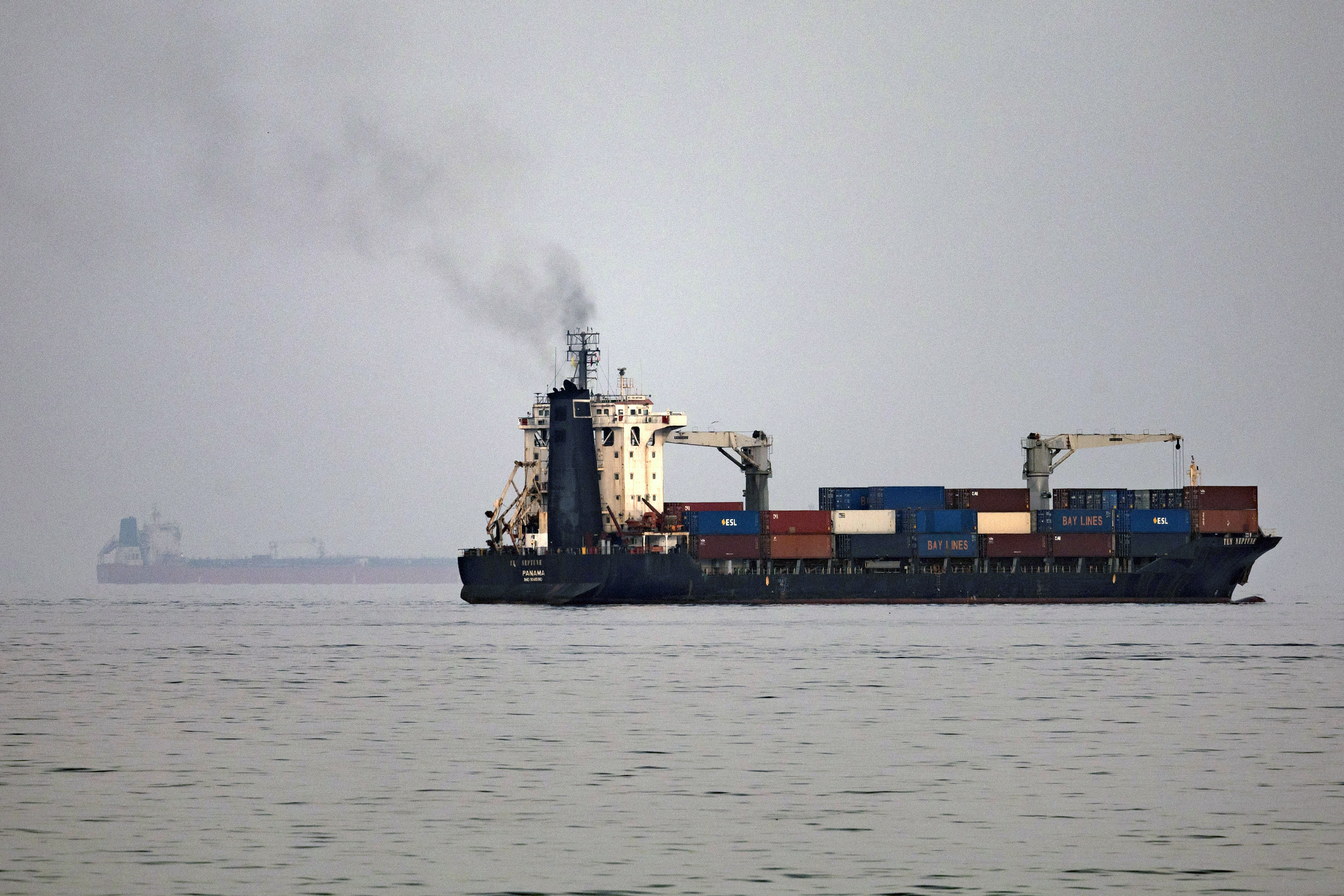
The Panama-flagged container shipping vessel Ten Neptune transits the Gulf of Oman off the coast of Khor Fakkan in the emirate of Sharjah in the east of the UAE on October 13, 2026. (Photo by AFP via Getty Images)
"Consultations through mediators are very intensive," Iranian Foreign Minister Abbas Araghchi said in comments to the state-run media outlet IRNA. "We have presented our conditions and proposals and everything depends on the political rationality of Washington."
Leaders in China and Russia both spoke out against a full-fledged resumption of hostilities on Monday, in comments from their foreign ministries. China is a major buyer of energy from the Gulf region, and after largely staying out of the conflict through its first several months, it has engaged more directly in recent weeks.
Advertisement
In Russia, the war in Iran has added to the nation's domestic fuel shortage, caused largely by strikes on oil refineries by the Ukrainian military and international sanctions levied against Moscow. President Vladimir Putin reportedly spoke with Iranian security lead official Mohsen Rezaei on Monday , per Reuters.
Even so, the diplomatic headlines haven't yet tempered predictions on Wall Street that oil prices will remain higher for longer. Goldman Sachs analysts led by Daan Struyven said on Monday that they now expect Brent prices to average $105 per barrel in December, up from a previous forecast of $90. They see Brent contracts averaging $88 per barrel in 2027, up from a prior $80 forecast.

Plumes of smoke rise from fires (right) at an oil refinery following what the authorities say is a Ukrainian drone strike in the course of the Russia-Ukraine conflict, in Moscow, Russia, September, 20, 2026. REUTERS/Stringer/File Photo
If the White House were to restart strikes on Iran, the US military would likely target nuclear stores buried in Iran's Pickaxe Mountain, missile facilities near the Strait of Hormuz, or broader civilian energy infrastructure such as power plants, the Goldman analysts said. Such a move would likely incite a response from Iran that could include impacts on oil infrastructure in the Gulf region, further pressuring an already strained oil market.
Elevated risks of escalation, beliefs that a lasting US-Iran diplomatic breakthrough will be hard to achieve quickly, and historical norms showing that past oil supply shocks have lasted for years with long-term damage all suggest the oil risk premium will stay higher for longer, the analysts said.
"Although Mideast output continues to recover as expected, we are raising our crude oil price forecasts because substantial downside supply risks are likely to sustain a large near-term risk premium," the analysts wrote.
Energy analyst Jeff Currie, previously the head of global commodities for Goldman Sachs, said Monday that given a resumption of hostilities would have widespread impacts on food and fertilizer supply chain, the most likely output is "managed instability," which would leave markets in the same tight spot for future oil deliveries.
"The compromise is managed instability, with Schrödinger's Strait at the heart of it: a Strait that is neither open nor closed," Currie said. "That caps the prompt barrel. It does nothing to cheapen the next one."
Follow Jake Conley on X @byjakeconley or email him at jake.conley@yahooinc.com.
Source: “AOL Money”
