


Sir Richard Eyre: My wife doesn’t know who I am anymore
Sir Richard Eyre: My wife doesn’t know who I am anymore

Louise CarpenterSat, November 7, 2026 at 12:00 PM UTC
0
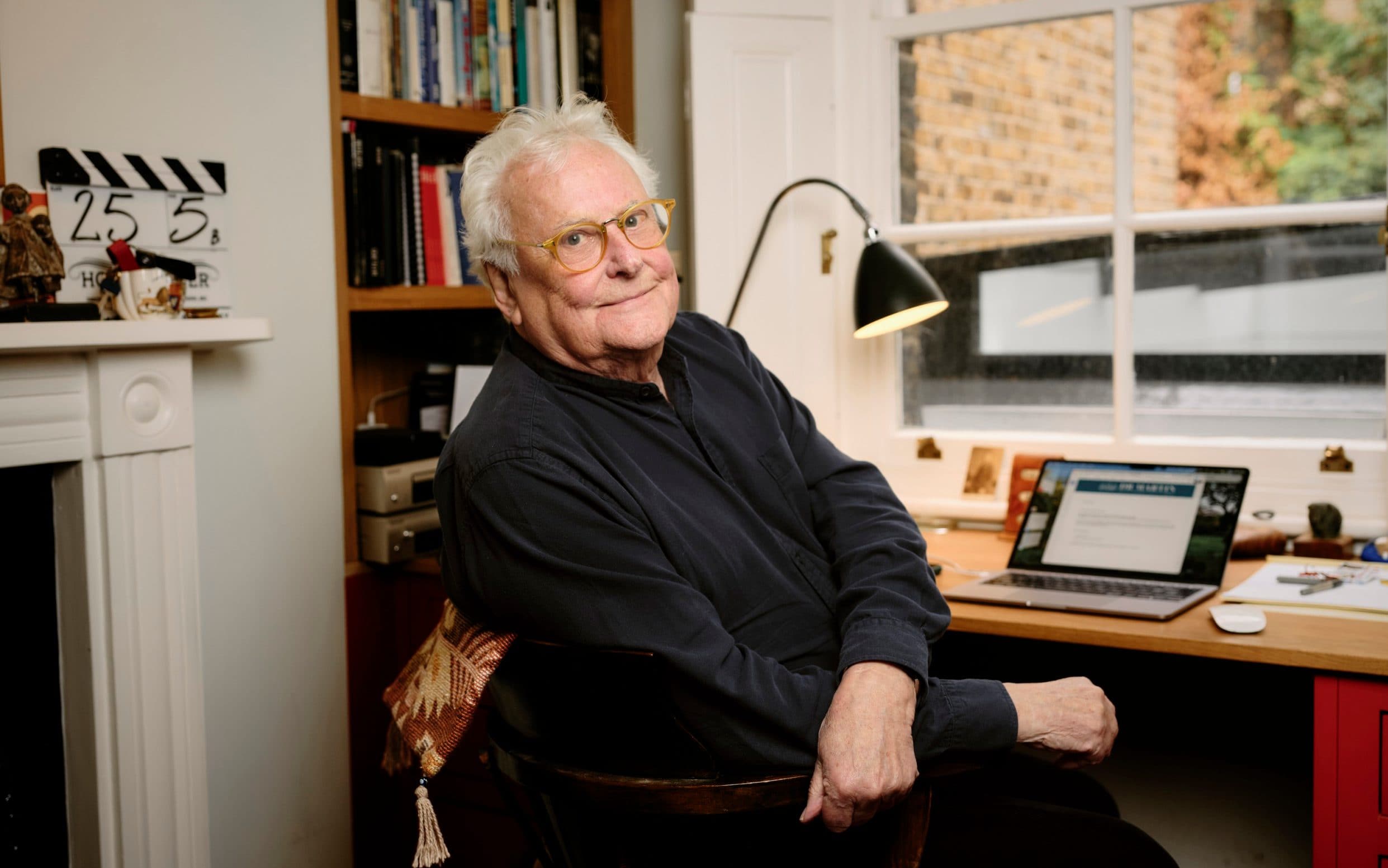
Sir Richard Eyre has been directing for six decades – and is still going strong at 83 - Rii Schroer
Rain is sheeting down on the late-Georgian square in south London where Sir Richard Eyre lives. I can see him through the front window, sitting at his desk, back to the street. He is bent over, writing, perhaps a play, an essay, a poem, a memoir or a diary entry, all mediums he has embraced while devoting six decades to stage and screen as Britain’s very top director.
He will tell me later that he was, in fact, writing a eulogy for one of his best friends, the composer George Fenton, who died suddenly in October. Eyre looks stricken when he reveals this, but it is just one of many personal losses that he has had to endure this year. He lost two of his other best friends in March: film producer Robert Fox and artist Glen Baxter.
But it is the ongoing and devastating loss of his wife, Sue Birtwistle, to Alzheimer’s that we will talk about at length later. It is the second time the cruel disease that he has likened in the past to “leprosy” has taken a loved one from him. He watched his mother, Minna, die of it over the course of 20 years. Her eventual death in 1992 led him to experience a period of depression.
I hadn’t known whether he’d want to talk about his beloved wife’s illness. They have been married for 53 years. She is now 80 and an award-winning film producer (Pride and Prejudice, Cranford, Emma). But he says of breaking his silence: “Yes, it’s OK. Sue isn’t going to read it and [for me] it’s refreshing to be able to talk about it because there are so many people in the same position. I am in the position to be able to, at the moment, afford a live-in carer but you know, a lot of people can’t and are looking after people who need to be looked after by trained professionals.”
A music-video film crew is setting up outside the black railings that line Eyre’s square. Do these hipsters realise that he is just metres away, the director of all directors? I doubt it.
After a brief spell as an actor on leaving Cambridge, Eyre has been directing for six decades, beginning at the Royal Lyceum Theatre in Edinburgh in 1967. He took over the National Theatre in 1988 from Sir Peter Hall and served almost a decade there, steering it through the choppy waters in which he first found it drowning.
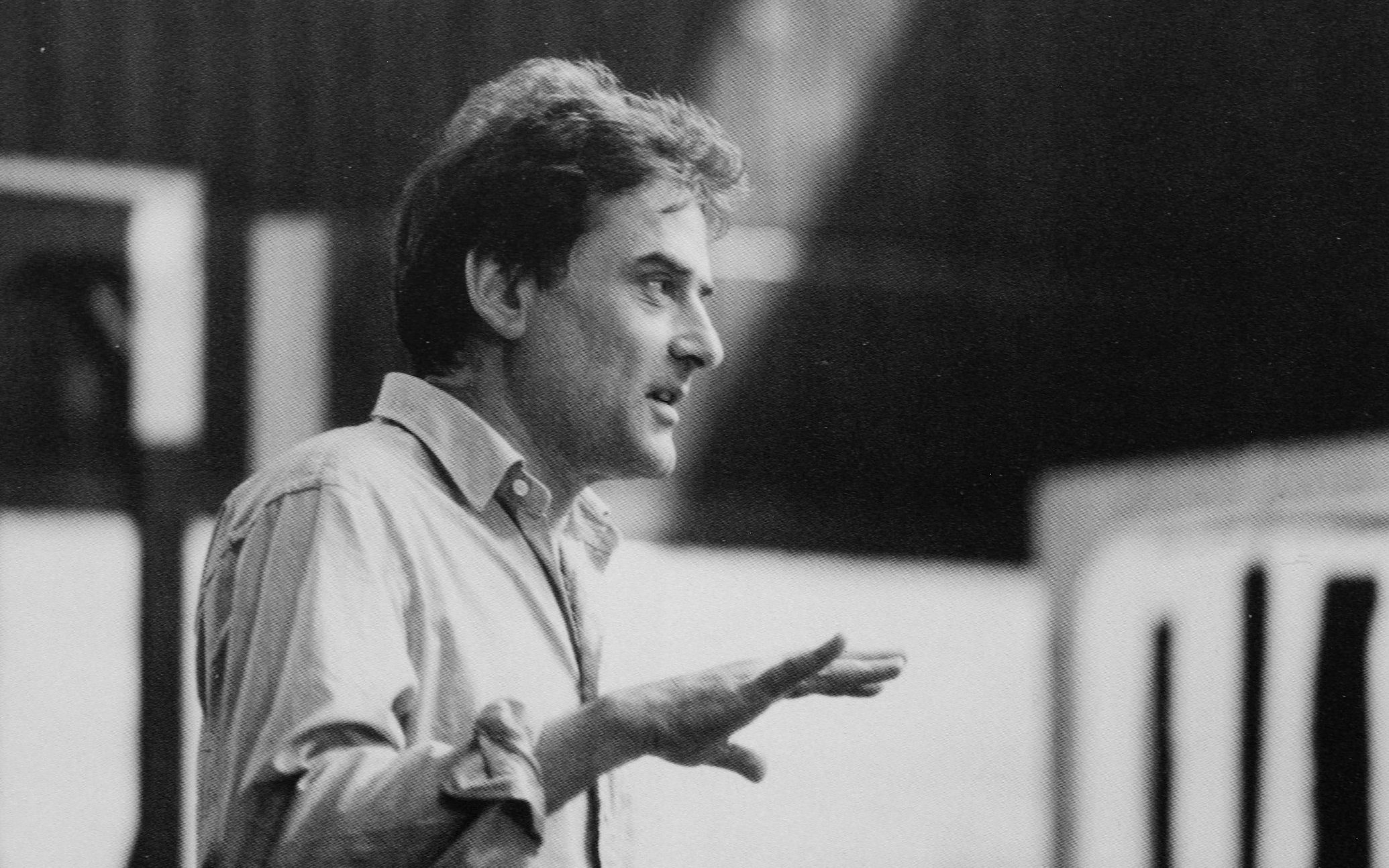
Eyre during his time as artistic director of the National Theatre
In 1997, he was knighted, an acknowledgement from the Government that this under-the-radar “pinko”, through talent, gravitas and pulling power, deserved to be a member of the Establishment. (He had the full support of Lady Mary Soames, chairman of the board of trustees for much of his time at the National, who was initially told “to clean up the pinkos” but, he says, “went native instead”.)
He accepted his knighthood, he revealed later, because the idea of it would have appealed to his late father, with whom he did not get on and who did not rate his profession. It’s a familiar story.
At the age of 83, Eyre is prolific, still commanding influence here and in the United States. His plays continue. There are four of his operas still in repertoire at the Metropolitan Opera in New York. He has had at least two standout Hollywood smashes, the first, Iris (2001), the story of Iris Murdoch’s descent into Alzheimer’s (a subject close to his heart due to his mother). The role of her husband, John Bayley, earned Jim Broadbent an Oscar, with nominations for both Kate Winslet and Judi Dench.
Five years later, Notes on a Scandal (also starring Dench, alongside Cate Blanchett) was another smash and received four nominations. This year, he directed Kenneth Branagh in The Tempest at the RSC and his earlier adaptation of Ibsen’s Ghosts was revived in London.
He has written a play to run in Cambridge next year. He will return to the National in March to direct Emilia Clarke (of Game of Thrones fame) in Plenty, to mark the 50th anniversary of the play, written by his friend Sir David Hare. The Housekeeper, in which he directs Sir Anthony Hopkins and Helena Bonham Carter, will also go on general release. And he is currently casting for another film, about Mahatma Gandhi’s visit to London in 1931.
And, early next year, a fictionalised version of Eyre will feature in the Oscar-tipped film Elsinore, about an astonishing production of Hamlet at the National in 1989, when the late actor Ian Charleson gave a career-defining performance in the lead role despite being in the throes of full-blown Aids and having only weeks left to live (more of which later).
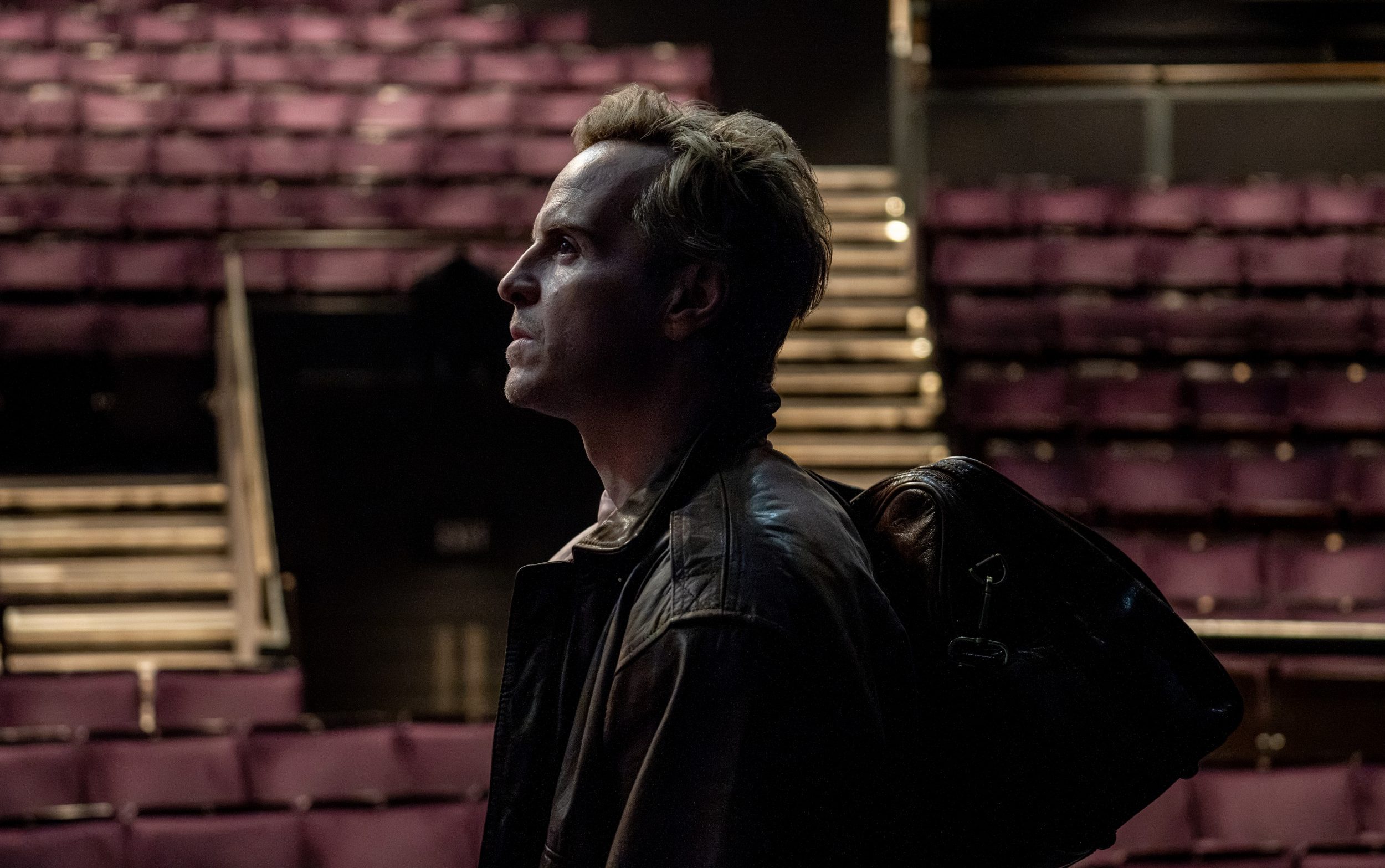
Andrew Scott stars as the actor Ian Charleson in Elsinore - Focus Features/Anthony Dickenson
Eyre is seven years off 90, with the creative energy of a man half his age. He is friends with all the greatest actors – Hopkins, Dench, Ian McKellen – and has worked with the best of the young lot too (Winslet, Florence Pugh, Caitríona Balfe). He is friends with novelists (“I wish I could have been a writer”): William Boyd, Ian McEwan, Julian Barnes, Rose Tremain.
All this tells an obvious story. He is liked and respected, with a sense of humour and an ear for the absurd and, of course, for dialogue. The late Jimmy Goldsmith once told him: “I don’t like going to the theatre – my legs are too long.” And Alan Bennett said: “I don’t think people should be made to go to the theatre if they don’t want to. It makes it such hard work for the actors.”
I knock on the door and Eyre gets up slowly from his desk to let me in. His face has become rounder with age. His hair is white and fluffy. The once dark, brooding brows, which contributed to his director’s allure, are also white. He wears the tortoiseshell-framed glasses of a Parisian intellectual and an outfit of navy. There is a modernity about him, not just sartorial. His work and his exposure to actors – “where there is no hierarchy” – has kept him young.
He moved to this house only two years ago, after 35 happy years in Brook Green, west London, with Birtwistle, where they brought up their daughter, Lucy – who lives opposite him in the square with her own family (they followed her here) – and where they entertained the great and the good. Birtwistle was once a professional-level cook: “Even Ruthie Rogers says it.” She can’t cook now. For the past six months, her rapid descent has meant that she now lives permanently in their house in Gloucestershire with a full-time carer. Eyre returns at the weekend. He will tell me more about how painful but necessary this is for his sanity.
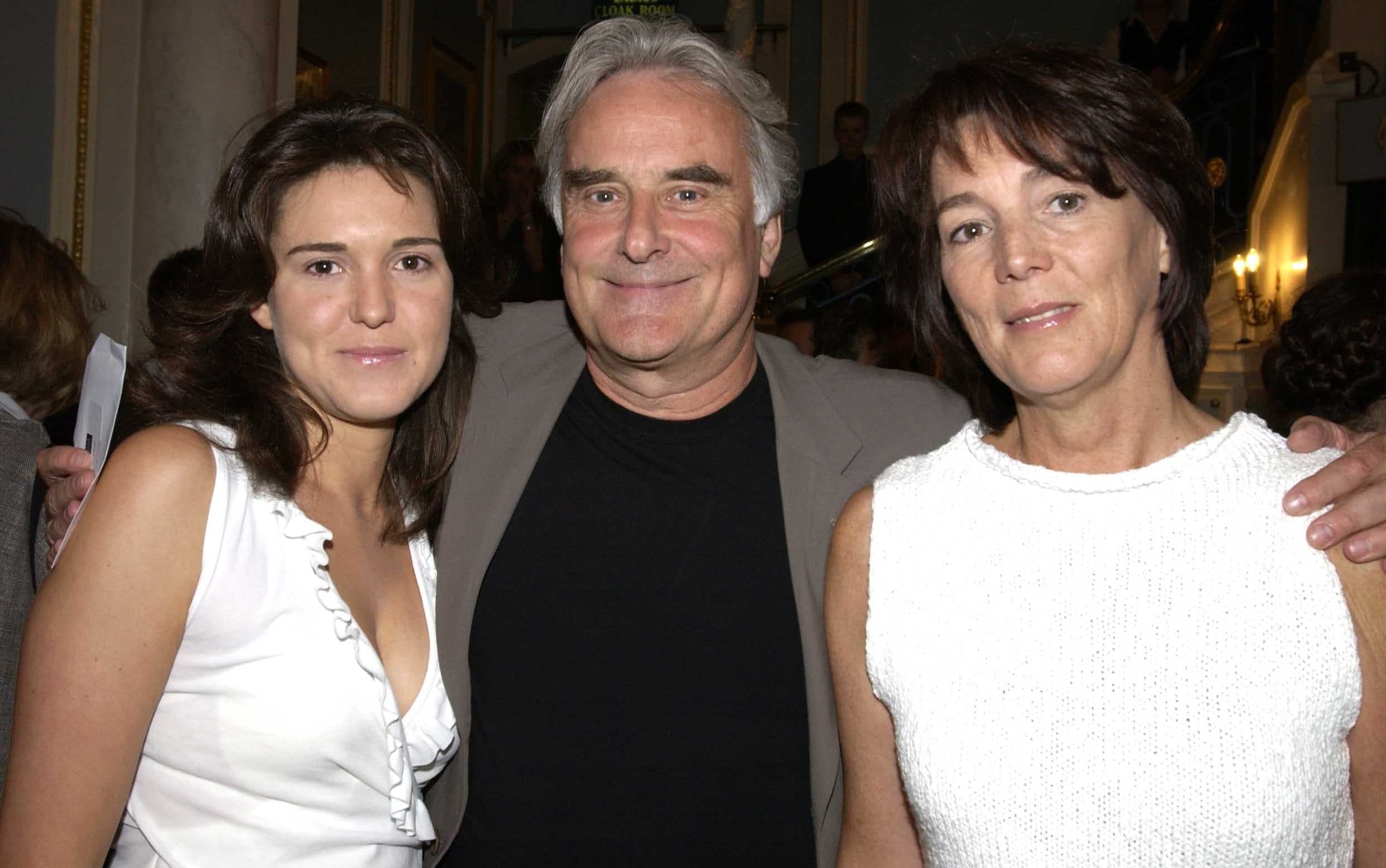
Eyre with his wife, Sue Birtwistle (right), and their daughter, Lucy, in 2002 - Shutterstock/Alan Davidson
Birtwistle’s Alzheimer’s was finally diagnosed in May 2020 during lockdown. He had thought something was wrong. She was in denial. There was a pain in her head that she said was caused by failed dentistry. But, in light of his mother’s experience, he booked for his wife to see a neurologist.
He writes about his mother’s dementia in all his non-fiction work (What Do I Know?, 2014; Utopia and Other Places, 1993; and his published diaries, National Service, 2003). It feels like it haunted him for years: “The personality starts to disappear and, with it, humanity and the soul. Leaving, as if in mockery, only the body to breathe and be fed.” The legacy of his mother’s demise, so drawn out, was that he feared he would develop dementia: “I don’t want to tumble over the precipice without knowing it’s there,” he writes in What Do I Know?.
But fate’s far crueller blow was to strike the love of his life, whom he married in 1973 in Chelsea Register Office: “My wife mostly doesn’t know who I am anymore,” he says now, as we sit in his refined and compact sitting room. “She talks about a man called Richard. Occasionally she thinks I’m her father, who was a lovely man.
“It feels like she has been possessed by a demonic presence. It’s not her. It’s not her fault. Work is a salvation, a refuge and I will go on until I drop.”
Until six months ago, the disease was manageable, “moving at a glacial pace”. But as the families of Alzheimer’s patients understand, it is a lonely, heartbreaking journey as a carer, so hard to make on your own. “I find it so hard being with Sue,” says Eyre with absolute honesty, “because I can’t do anything [to help]. I just haven’t got the patience.”
Advertisement
Having his daughter, her husband and Eyre’s granddaughters Eva, 16, and Beatrix, 14, across the road is lifesaving. “But my daughter is devastated too. She is an only child.” Eyre was, for a while, patron of the Alzheimer’s Society (Judi Dench serves that role now). He knows what the disease does. “The thing Sue loves doing is colouring. She has colouring books and I bought her this fantastic collection of watercolour pencils in 70 colours and she spends ages sorting out the colours and then taking them out and putting them back, and colouring in, quite eccentrically but always within the lines. There will be a coloured-in frog but no certainty it’s green. She will colour in for hours, just talking away but not one single word connecting to the other.”
In Gloucestershire, where the couple bought their second home in the 1990s, they built a fabulous garden. It is Eyre’s balm at the weekends, along with their dog, which stays with Birtwistle. Her move to the country without him was never the plan, even with the Alzheimer’s. He thought they might manage together in London. Before the diagnosis, “we planned to travel a lot, spend our time in Gloucestershire and have the odd project ticking over”.
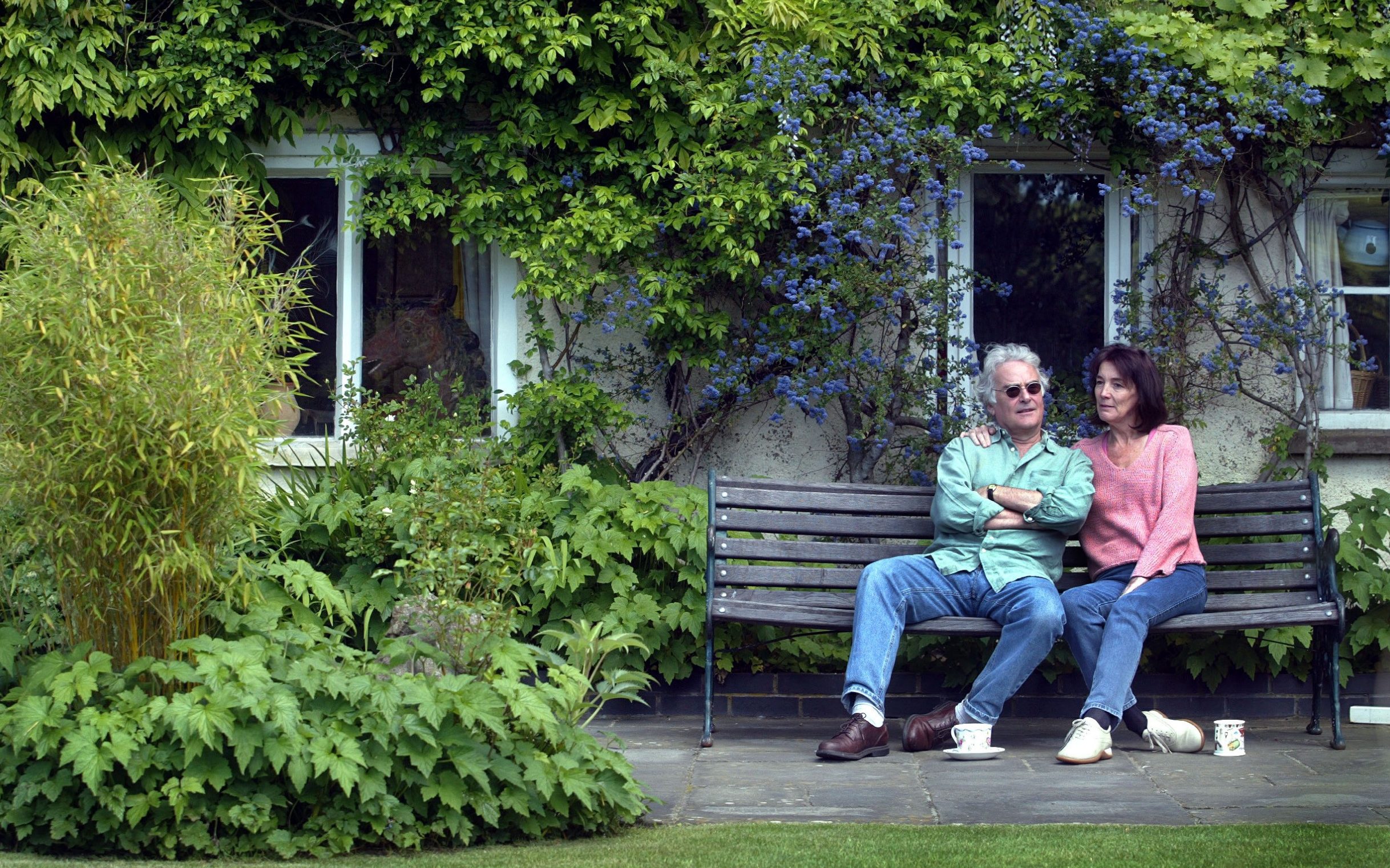
The couple in 2004, in the garden of their cottage in Gloucestershire - Martin Pope
But it is no longer safe for her to live in London. While we talk, his phone rings and he gets a message from the carer. Birtwistle had slipped out unnoticed and was found wandering about their village by a neighbour. Eyre returns to me looking perturbed but not panic-stricken. The danger has passed. She is on the waiting list for the dementia wing of Denville Hall, the residential care home for the acting profession in Northwood, north-west London. When she eventually moves there, she will be closer to him.
He shows me a beautiful study area overlooking the garden, designed by the architect they brought in when they knew they were moving here (there is an incredible open cabinet on the halfway landing containing all Eyre’s and Birtwistle’s film and stage industry awards). This study area was intended as a place for Birtwistle, so that she could continue with a film project, raising money to bring a Jane Gardam novel to screen. “She said to me, ‘I can’t do a film; I won’t remember the names.’” During her career, she made a point of learning by heart every single name of cast and crew, no matter the size.
I first met Eyre a week earlier, at a talk he gave at his old school in Dorset, the private boarding school Sherborne Boys. It is near where I live. He had a terrible time there – he was expelled for backchat – and to this day he loathes the late headmaster, who forbade him from ever calling himself an “Old Shirburnian”.
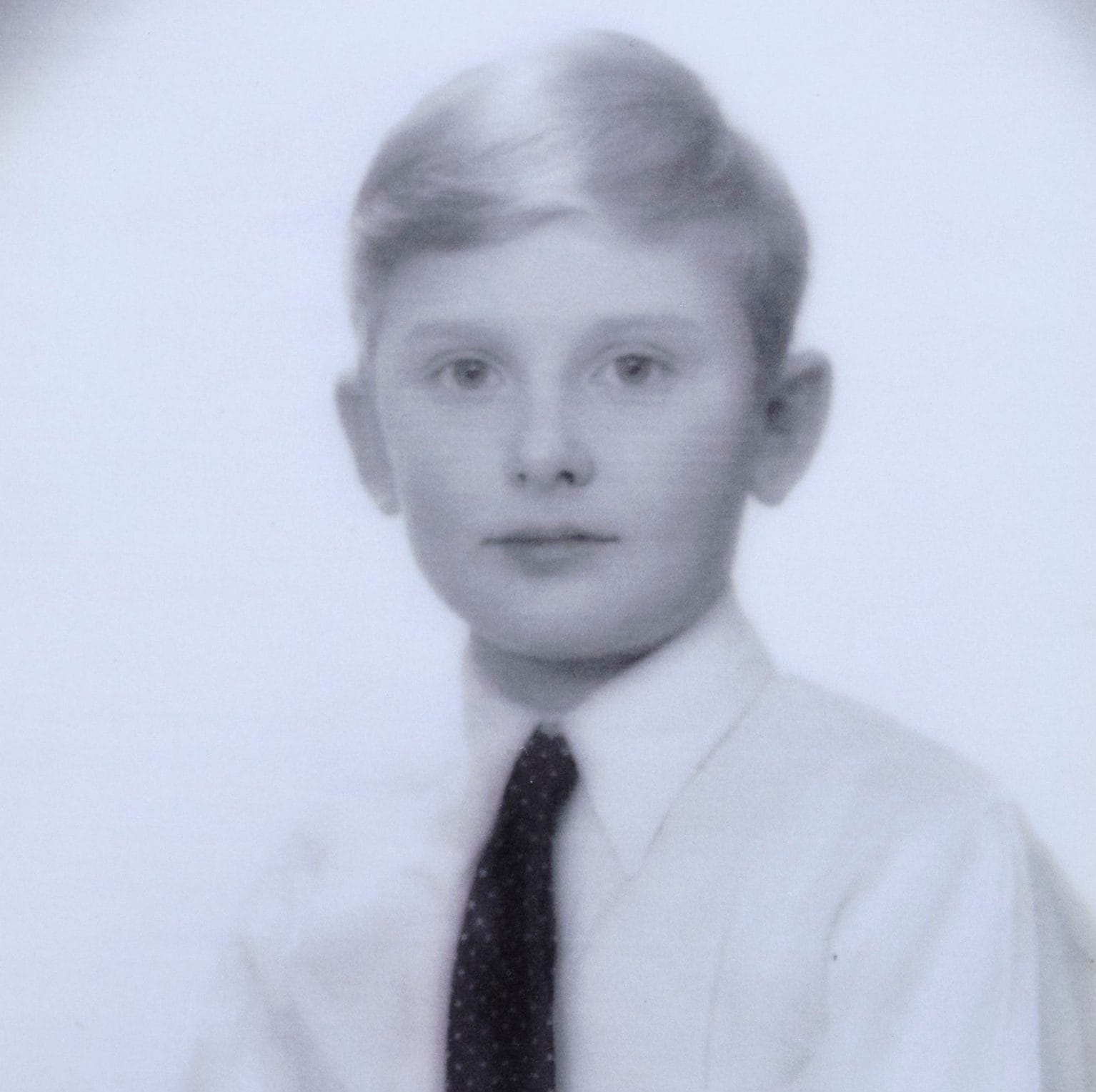
Eyre aged about 10, some years before he became a pupil at Sherborne Boys - Rii Schroer
The school was a bad fit for an arty boy (although it has since produced some fine actors, including Hugh Bonneville and Jeremy Irons). It was for the children of the military (as it still is, although very much changed). Eyre’s father was a naval officer and they lived nearby in the village of Maiden Newton. He had nothing in common with his father, who called Shakespeare “balls” and talked of the importance of “f---ing”. His mother was upper middle class and distant.
He tells me he spent months resisting the invitation to return to Sherborne – he is up there with its most glittering alumni – and then suddenly realised he was being churlish. He feels the same way about criticising his parents: “There comes a time when you should just stop going on about it.”
He was amazed at the change in his school: “The body was intact but the soul had disappeared, and the soul [then], in my view, was quite a malign soul.” Its “body” is architecturally stunning.
Eyre’s nostalgia for the Dorset landscape of his childhood has sharpened with old age. He tells the story of a moment of true happiness, driving to Sherborne with his mother, bathed in sunshine. “The older I get, the more distinct memories are from my childhood.”
He looks close to tears when he speaks of his mother, whom he never reached, through class reserve, public-school distance, and then two decades of dementia. “I am deeply affected whenever I see anybody dressed in those Forties summer dresses like my mother wore.” (It is surely this ability to access and process deep feeling that contributes to why he is such a good director.)
During the talk, the auditorium was played a clip of Iris, Judi Dench’s blank face stripped by the disease, filling the screen: “I hadn’t watched it since Sue got Alzheimer’s,” Eyre says now. As the clip rolled on, I watched Eyre take off his glasses and wipe his eyes. How could the audience know of such a subsequent cruel blow? When it ended, he announced to everybody: “I couldn’t make that film now. My wife has Alzheimer’s. I’m too close to it.”
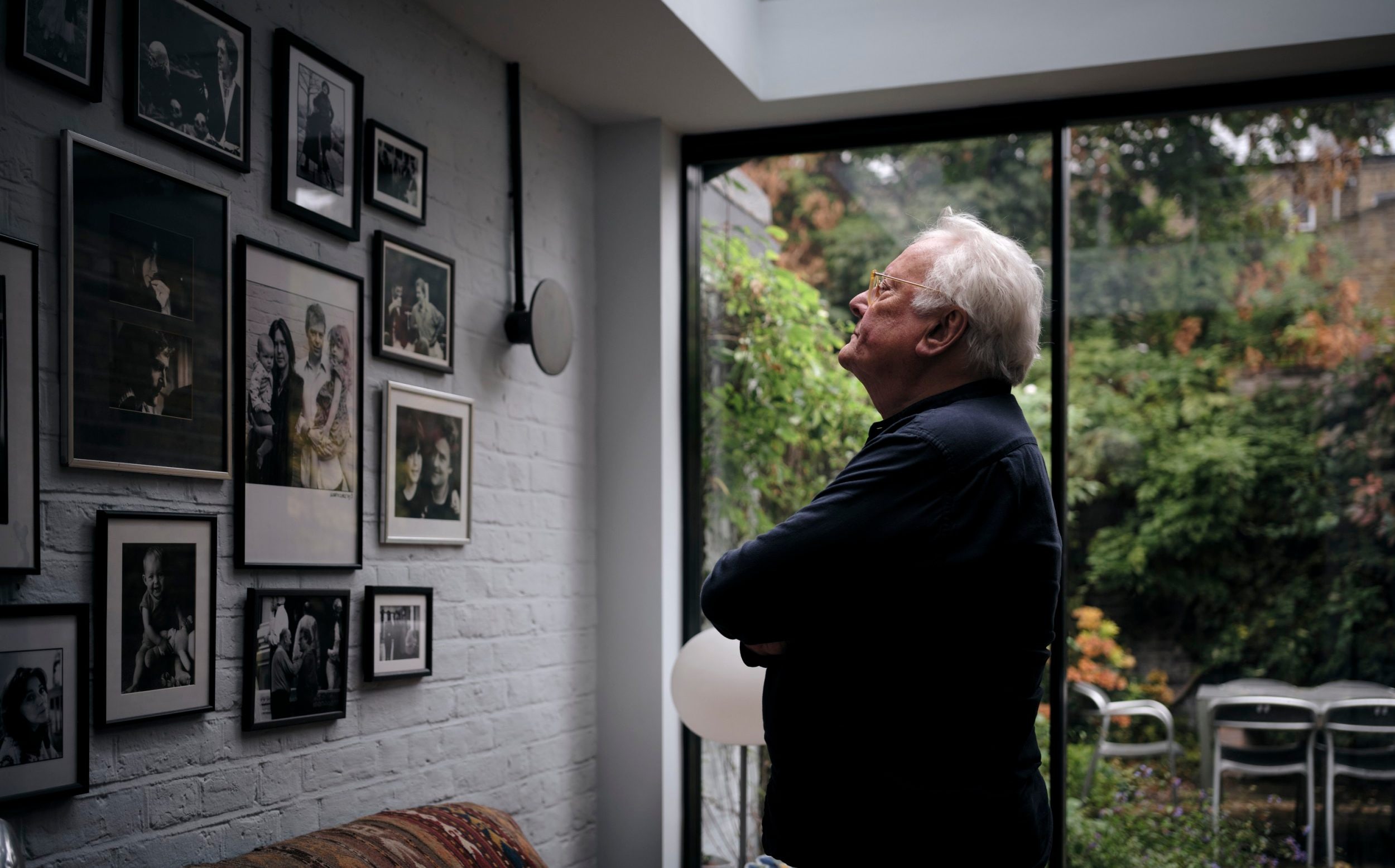
Eyre admits that nostalgia for some elements of his past have sharpened with old age - Rii Schroer
In his 2014 book of essays on the arts and politics, What Do I Know?, Eyre said: “I write to discover what I think.” But he tells me that he hasn’t kept a journal since leaving a fat diary on a Virgin Atlantic flight from London to New York more than 20 years ago when he was directing Carmen at The Met. He mimes how thick it was, “maybe five years’ worth of entries… I kept thinking of a cleaner picking it up and chucking it in the bin.”
A scammer tried to con him out of $1,000 after he posted an appeal on the Virgin website. “I have it,” the email said. “OK, send me a page and I’ll give you the money,” Eyre wrote back. No page. He has never been able to write an entry since. “The continuity is broken,” he says.
And who is his support network?
“I suppose you mean, ‘Is there somebody I open my heart to?’” Eyre says. “I have lots of friends. I lost the three good friends in the last few months. George was much younger than me. Losing friends, that’s the worst.”
The forthcoming Elsinore is the story of another loss. Eyre (played by Johnny Flynn in the film) had only taken over as artistic director of the National the year before, and had cast Daniel Day-Lewis as Hamlet. But during his 65th performance, the actor suffered a nervous breakdown and walked out, never to return.
Eyre knew that Ian Charleson (most famous for playing the Olympic sprinter and missionary Eric Liddell in Chariots of Fire) wanted to play Hamlet (he had directed him in his very successful revival of Guys and Dolls in 1982). He also knew he was HIV positive. But he went with his heart. Charleson had developed Aids by his first performance on October 9, 1989. He told the cast and crew a few weeks in as they watched the disease ravage him. Stories were leaked to the press. There was some paranoia within the National about contagion.
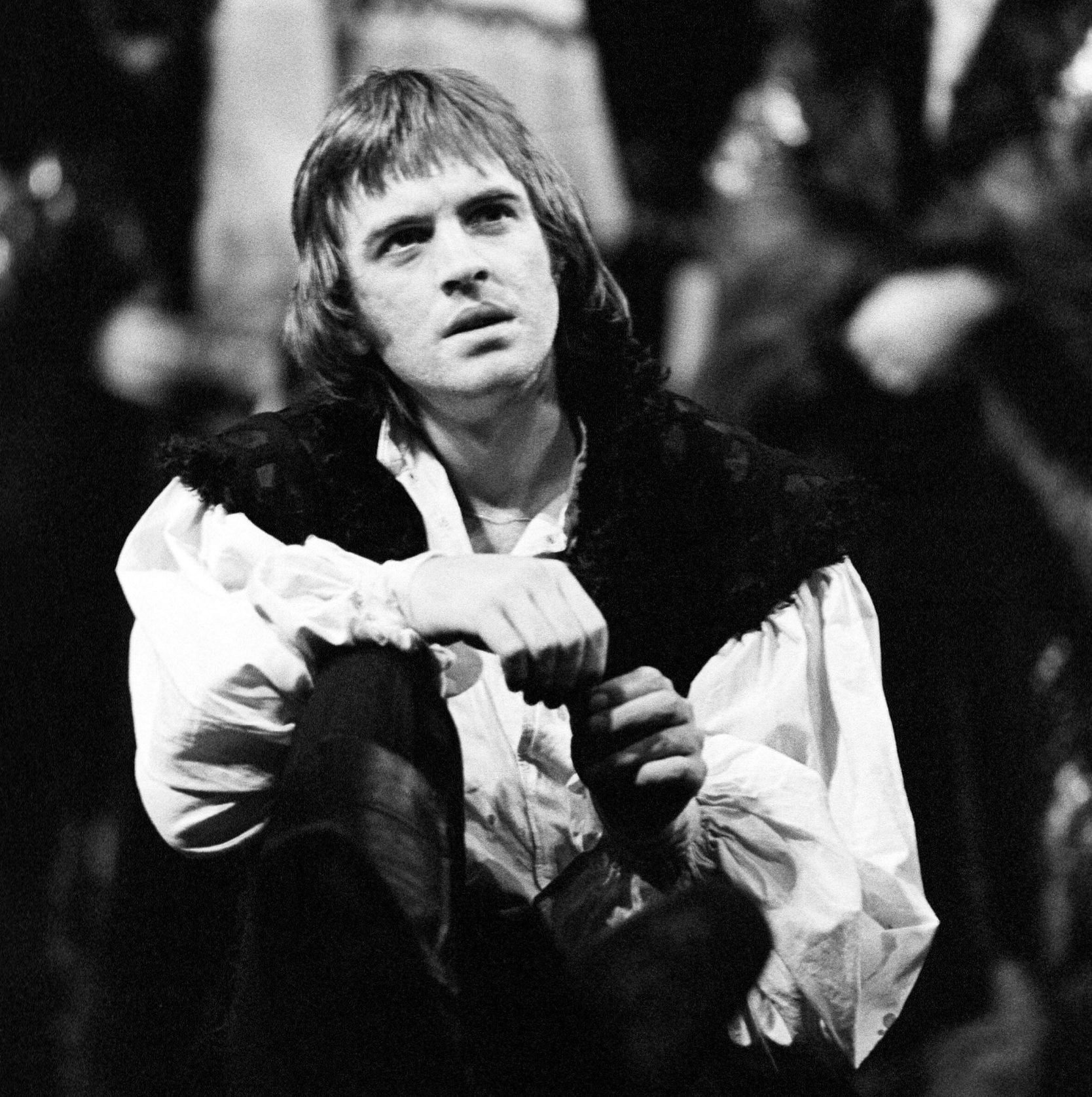
Charleson as Hamlet in 1974, more than a decade before his career-defining performance in the same role at the National - Alamy/Donald Cooper
The Telegraph’s film critic Tim Robey describes Flynn’s portrayal of Eyre as “buoyant and just-right”. But Eyre can’t endorse the film’s version of how he was: “I was in agony. The film suggests I was very easy-going, generous and calm, but I wasn’t. I was terribly conflicted.”
The film’s writer, Stephen Beresford, did a lot of research for his script. Perhaps Eyre presented as buoyant? “Yes, I would have tried my best to present as being as calm as possible.”
Eyre did not need to cast Charleson (especially after the nightmare of Day-Lewis’s fleeing). Why not give it to Jeremy Northam, the understudy who was “very, very good” and certainly in good health? But Eyre’s decision to follow his heart changed the end of Charleson’s life. Charleson left the play on November 13. He sent Eyre a Christmas card in which he said he’d play Hamlet again when he was well. Eyre still has it.
Charleson died in early January 1990. Eyre had given him his last wish, the defining role of his life. It’s all that mattered. You did that for him, I tell him. “Well, he certainly had a noble end to his life,” he agrees, “and that’s not nothing.”
The power and the love between Eyre and his actors has always been two-way. He needs that now. That is the real answer to my question about support, along with his daughter: “Working in the theatre or making films always seemed to be my surrogate family. I’ve always felt confident [about myself] within that. I don’t know what I would do if I couldn’t work.”
Source: “AOL Entertainment”
